
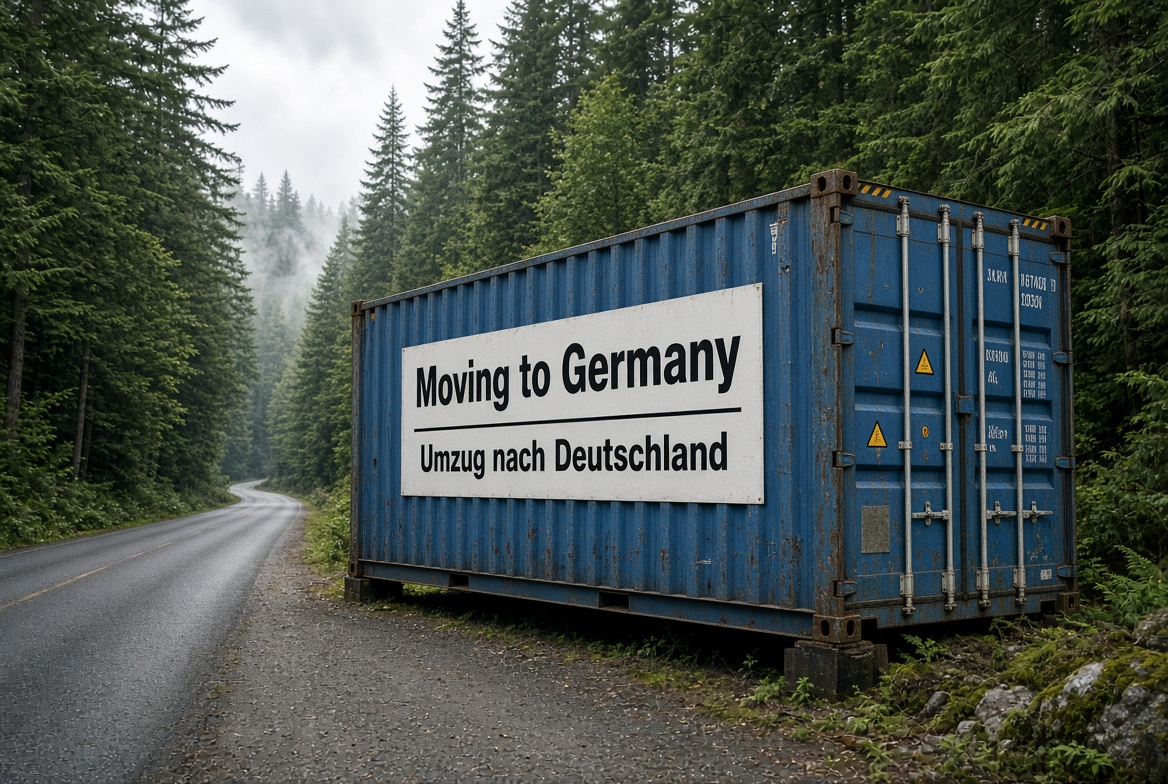
Whether you are sending holiday gifts, transporting personal vehicles, or executing a full overseas relocation, shipping items across the Atlantic between Vancouver, BC, and Germany requires choosing the right logistics path.
Here are the top three practical ways to handle your shipments, supported by established German freight and logistics providers.
1. Small Packages and Holiday Gifts: Air Express & Postal Networks
For small articles, care packages, and seasonal holiday gifts, speed, reliability, and simplified customs clearance are essential.How It Works: Parcels are typically flown from Vancouver International Airport (YVR) to major German hubs such as Frankfurt (FRA) or Leipzig/Halle (LEJ), then handed off to ground courier networks for last-mile delivery. DHL Express operates a major European hub in Leipzig.Top Provider: DHL Express, headquartered in Bonn, Germany (part of DHL Group), maintains Service Points across the Vancouver area, including Downtown Vancouver (e.g., 595 Howe Street) and Richmond. Customers can complete customs declarations online. For non-urgent shipments, DHL also integrates with national postal networks.
Find local drop-off points: DHL Express Service Point locator (Canada).
2. Vehicles and Large Equipment: Roll-on/Roll-off & Container Sea FreightShipping oversized items such as automobiles, motorcycles, specialized machinery, or high-end bicycles requires heavy-duty ocean freight solutions.
How It Works:
- Bicycles and compact gear can be securely crated and sent via air freight or Less-than-Container Load (LCL) ocean freight.
- Cars and larger vehicles are transported either via Ro-Ro (Roll-on/Roll-off) vessels or secured inside dedicated 20 ft / 40 ft ocean containers. Shipments typically originate from the Port of Vancouver and arrive at major German ports such as Hamburg or Bremerhaven (Europe’s largest vehicle-handling port).
Top Providers:
DB Schenker (headquartered in Essen, Germany) offers global ocean and air freight management with operations in British Columbia and specialized vehicle logistics capabilities.
DACHSER is another major German logistics company providing integrated groupage, LCL/FCL, and air/sea services worldwide.
3. Full Household Moves: International Relocation & Sea Container Shipping
Relocating an entire home from Vancouver to Germany requires full-service international moving that includes door-to-door packing, container logistics, and customs processing.
How It Works: Professional international movers pack belongings at your home in Vancouver and load them into sea containers. Shipments move by rail or road to port, cross the Pacific/Atlantic (often via the Panama Canal or other routings), arrive at German ports such as Hamburg, and are delivered to your new address for unpacking. Choose a Full Container Load (FCL) for complete households or Less-than-Container Load (LCL / shared container) for smaller volumes.
Top Provider: Hasenkamp is a long-established German relocation specialist with more than a century of experience managing international moves, including Canada–Germany routes. They offer dedicated consultants, professional packing, and customs coordination.
Additionally, the FIDI Global Alliance connects accredited movers worldwide. FIDI affiliates adhere to the independently audited FAIM quality standard, helping ensure consistent high standards at both origin and destination.
Quick Tips for Smooth Shipping
Customs Duties & Gift Exemptions: When sending holiday gifts to Germany, clearly declare items on the customs form (CN 22/CN 23). Genuine occasional private-to-private gifts valued at €45 or less are generally exempt from import duties and VAT, provided they are non-commercial, intended for personal/family use, and sent free of charge.
See official rules: German Customs – Gifts.
Moving Tax Exemption (Übersiedlungsgut): If you are transferring your primary residence to Germany after living outside the EU for at least 12 continuous months (exceptions possible with proof of intent), you can import used personal household goods duty- and VAT-free. Key conditions include: goods owned and used for at least 6 months prior to the move, importation within 12 months of establishing residence in Germany, and continued personal use (typically no sale or transfer for 12 months). Formal declaration (e.g., Form 0350) and supporting documents are required.
Full details:
German Customs – Transferring Residence / Übersiedlungsgut.
Vehicle Documentation: Car exports from Vancouver require proof of ownership, vehicle registration, and a clear title certificate before loading. Vehicles can also qualify for Übersiedlungsgut relief under the same rules when conditions are met.
Plan Ahead: Peak seasons, vessel schedules, and customs processing mean full household moves from Vancouver typically require 8–12 weeks from packing day to final delivery in Germany (ocean transit alone from the Port of Vancouver to Hamburg is often 25–45 days; inland transport, consolidation, and clearance add time). Air freight is significantly faster but more expensive. Always build in buffer time and obtain multiple quotes.
Useful Official & Industry Links
- Port of Vancouver: portvancouver.com
- German Customs (Zoll): zoll.de
- FIDI Global Alliance & FAIM standards: fidi.org
- DHL Express Canada: dhl.com/ca-en
TAGS: #ShippingFromVancouverToGermany #MoveToGermany #UmzugNachDeutschland #VancouverToGermany #InternationalRelocation #HouseholdShipping