
Next year marks the 20th anniversary of a publication that started, quite literally, as a joke between siblings.
“My brother used to say, ‘There are three methods of mass communication: Tell-ephone, Tell-evision, and Tell-Elke,'” I wrote in the very first issue. It was November 1st, 2007, and I had just launched German Voices Vancouver — a name that, in hindsight, undersold what I was actually trying to build.
Once Upon a Time, on Fraser Street
Every publication needs an origin story, and mine has a fairy-tale opening line for a reason — it really did feel like a small piece of magic.
I walked into the old Fraser (German) Bakery on Fraser Street one day. It had recently changed hands, bought by a Russian-Canadian woman. She looked at me and asked, “Are you German?” I said yes, and she said she had a question for me.
She pointed to a big stack of newspapers by the till — Russian papers — and said, “Russian community small; three papers!” Then she pointed to a spot near the counter that was completely empty. It was where the German papers used to sit: the Kanada Kourier, the Pazifische Rundschau, the Deutsche Presse; All gone. “German community big,” she said, “but no papers.”
That was it. That was the spark. I went home that same day and started writing what would become the very first issue of German Voices Vancouver — fittingly, with a feature story on Ritter Sport, the German chocolate brand.
The Germ of an Idea (2004)
The story actually begins three years earlier than that first issue, in June 2004 — with a letter I didn’t write.
Wolfgang Wessel, a Consular Officer for Legal and Economic Affairs at the German Consulate in Vancouver, sent me an invitation to help launch a new site called Germansinbc.ca, built on the motto “Community first.” It was a Consulate-backed initiative meant to be a hub for the German-speaking community in BC: a business directory (“Gelbe Seiten”), a search-and-find section, an events calendar for things like Christmas markets and German films, and a discussion forum.
It was, almost point for point, the thing I’d been dreaming of. I RSVP’d, went to the launch at the German Consul General’s residence on July 8th, 2004, and watched the project unfold from the outside. But the itch to build something myself — something I actually ran — never really went away.
Volume 1, Issue 1 (November 2007)
I had the background to actually pull it off: raised in Surrey’s German-Canadian community, educated at Surrey German School, German spoken at home, and — after marrying a Canadian who’d studied at the Goethe Institute — three years in Australia as Authorized Supervisor of the Preschool (Kindergarten) of the Private Johannes Gutenberg German School in Sydney. On top of that I was on the editing committee of several publications, including the Swiss Herald.
So in November 2007, Volume 1, Issue 1 went out, chocolate feature and all. The pitch, in the original German, was simple:
*”German Voices Vancouver” ist DAS neue Mitteilungsblatt für deutschsprachige im Raum Vancouver und Umgebung. Wir bieten jeden Monat ein Sonderbeitrag über eine Firma/Organisation an und ein Sonderbeitrag über ein gemeinnütziger Verein/Wohltätigkeitsorganisation an. Außerdem gibt es Kleinanzeigen, Leserbriefe, interessante Webseiten und Witze.
Translated: a monthly newsletter with a featured business, a featured non-profit, classifieds, letters to the editor, interesting websites, and jokes — free, distributed through bakeries, coffee shops, libraries, and community centres, and funded by ad space for ten for-profit and ten non-profit advertisers each issue.
The dream I described in that first Editor’s Note went further still: a German Cultural Centre, complete with a library, museum, playgroup, preschool, and after-school care.
I didn’t know it yet, but that dream already had a history of its own.
The Cultural Centre That Never Was
Years after writing that Editor’s Note, I learned that the German-speaking community of BC had tried to build exactly this, decades before I ever picked up a pen.
Riding the momentum of Germanica ’88, and unable to write off donations through the DKK (Deutsch Kanadischer Kongress), a group of community members led by Otto Rieve set up the German Cultural Centre Foundation — a registered charity with its own tax number, whose goals were to preserve German language and culture and to foster tolerance and cooperation among Canada’s ethnic and multicultural groups. Membership was free, and donors could claim a tax credit.
The Foundation surveyed the whole ecosystem of German-speaking organizations in the Lower Mainland — the German Canadian Congress, the Vancouver Westside German School, the Surrey and North Shore German language schools, the Vancouver German School (East), St. Mark’s Church, the Austrian, Dutch and German Business Associations, the German Canadian Chamber of Commerce, the German Consulate General, the Goethe Institute, the Swiss Society and Swiss-Canadian Chamber of Commerce, the Austria Club, the Vancouver Alpen Club, and Club Berlin — to find out what people actually wanted.
The answer was expansive: a library with an archive and reading room, a coffee house, an all-purpose hall with a stage, a youth hangout, a restaurant, a rentable commercial kitchen, a movie theatre, a kindergarten, a classroom, and a wine room — hosting everything from German film screenings and concerts to language classes, art shows, and continuing education courses.
They got remarkably far. The Rt. Hon. Edward Schreyer, a former Governor General of Canada, agreed to serve as Patron of the German Cultural Centre. The Foundation developed a logo, printed a brochure, and sent out more than 700 Christmas greetings to members in 1993. Its board included Otto Rieve, Wolfgang Christl, Albert Köhler, Silvie Kerber, Jost Tielker, Artur Lübkemann, Harald Lincke, and Carole Gerber.
The Foundation eventually wound down, and the centre was never built. But finding out that dream had existed — with a patron, a logo, and 700 Christmas cards behind it — was its own kind of validation. The idea hadn’t died; it had just been waiting for someone else to pick it back up.
The Magazine Years
Between the newsletter and the website came a chapter I don’t talk about as often: a couple of tries at a proper print magazine. First came an issue actually titled Westcoast German News and then came Das Schwarze Brett (“The Black Board” — a nod to the community notice-board tradition), both published through MagCloud.
Those 16-page publications didn’t last, and the reason was mostly practical rather than editorial: MagCloud required readers to register for an account and set up a password before they could get to the content, and that extra step was enough friction to lose a lot of would-be readers who just wanted to flip through a magazine, not sign up for one more service.
But the magazine years weren’t wasted. That’s where I taught myself the actual craft of publishing — pagination, working with images, laying out a spread, conducting an interview properly — skills that shaped everything that came after, even once print gave way to the web.
From Newsletter to News Outlet
The cultural centre never materialized as a bricks-and-mortar space, but the publishing side of my dream did — and it kept evolving. What started as a print newsletter passed hand to hand at the local bakery, and continued through those print-magazine experiments, eventually grew into westcoastgermanmedia.com, a proper digital publication serving the DACH (Germany-Austria-Switzerland) community across Canada, under the banner Westcoast German News / Westcoast German Media.
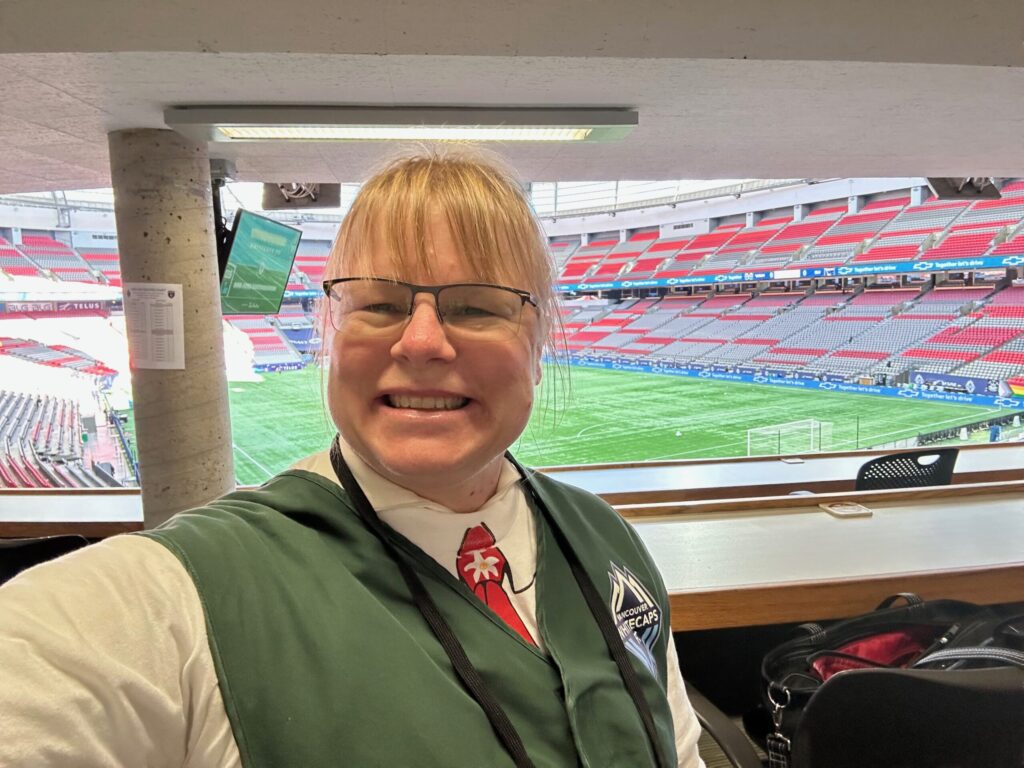
Along the way the outlet grew more ambitious in scope: SEO-driven journalism, event coverage, community reporting and even a role as a trusted voice contributing to other outlets like World Business Network News. After that, I also got media accreditation for the Vancouver International Film Festival, the Web Summit, the Vancouver Whitecaps, the FIFA Fan Festival and various other smaller events.
Nearly Twenty Years Later
What hasn’t changed since that first issue is the underlying instinct: that a scattered community — German-speaking newcomers and long-timers alike, spread across a city — needed somewhere to find each other, hear each other’s stories, and get useful, entertaining, or informative content they’d actually come back for.
Looking at that first issue now, the resemblance is striking. The bones are all still there — the community focus, the featured organizations, the reader mailbag, the sense of a Mitteilungsblatt rather than just a news site. Twenty years on, “Tell Elke” is still, in its way, exactly what’s happening.
The End
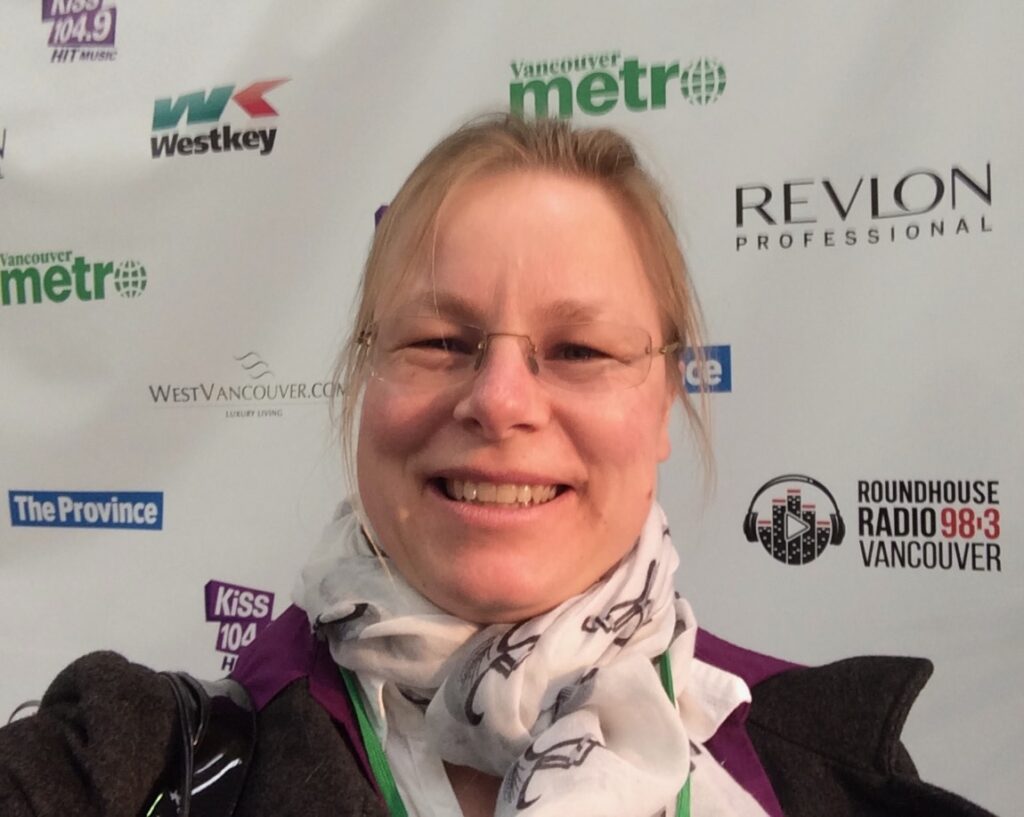
This picture is my first Vancouver Fashion Show as media – March 19, 2016.
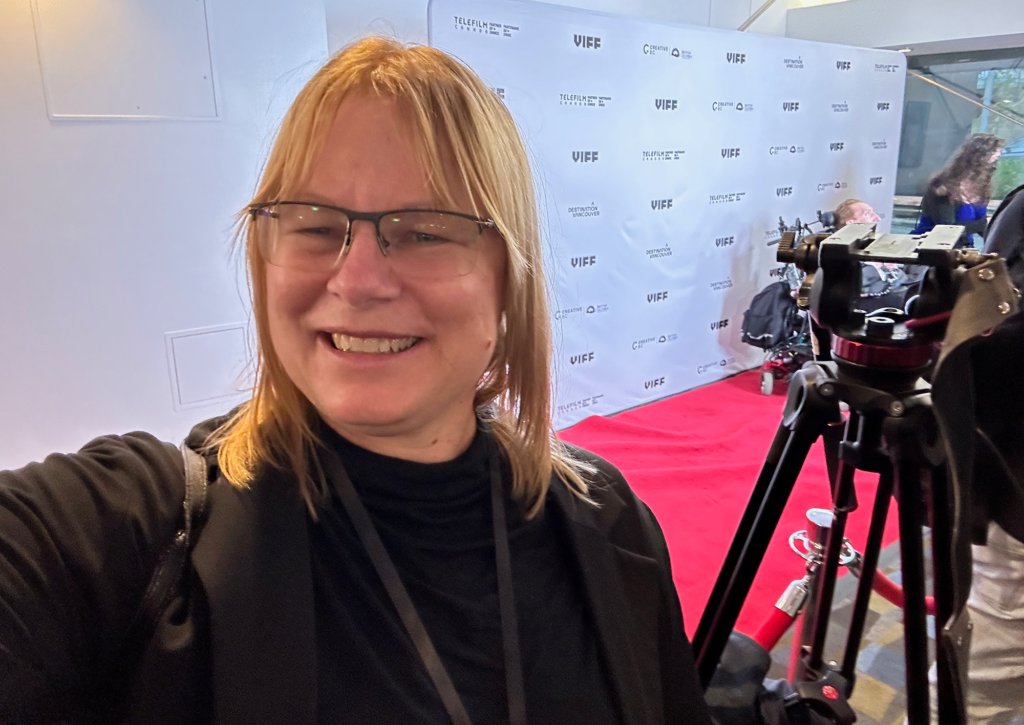
This was my first Vancouver International Film Festival as Media in September 2024.
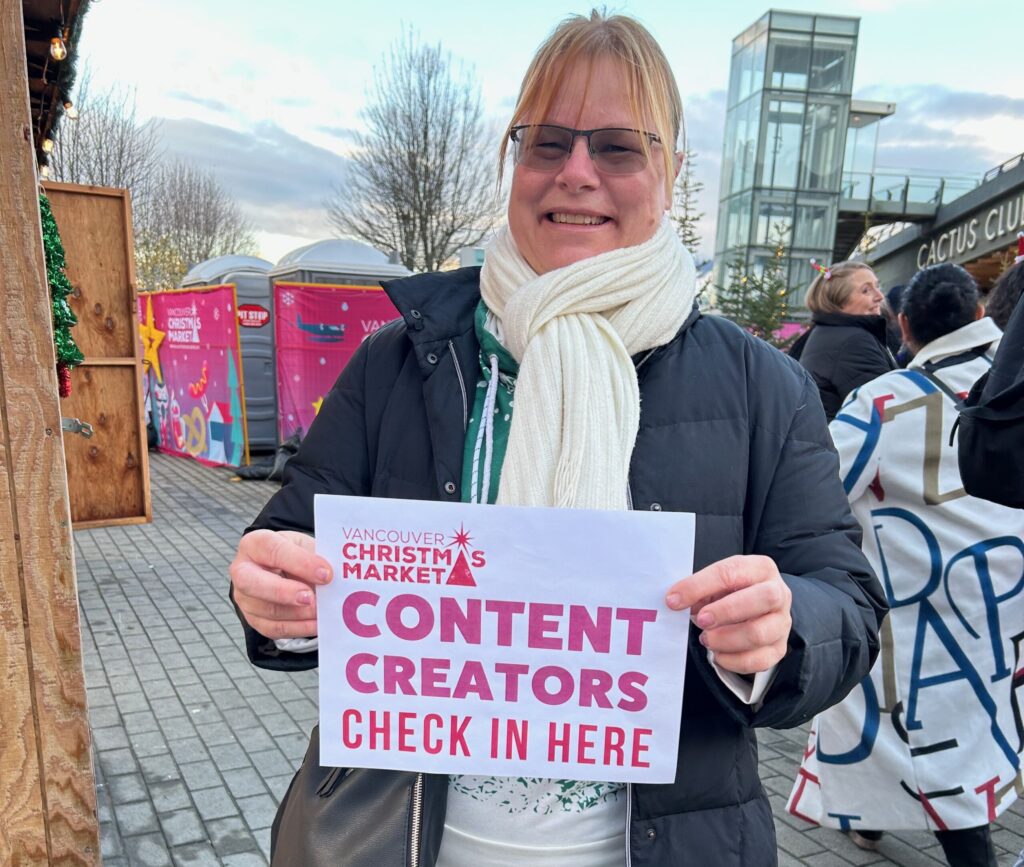
This is November 14, 2024 when all the content creators and media were invited to the Vancouver Christmas Market downtown Vancouver.
This is my first Web Summit on May 27, 2025.

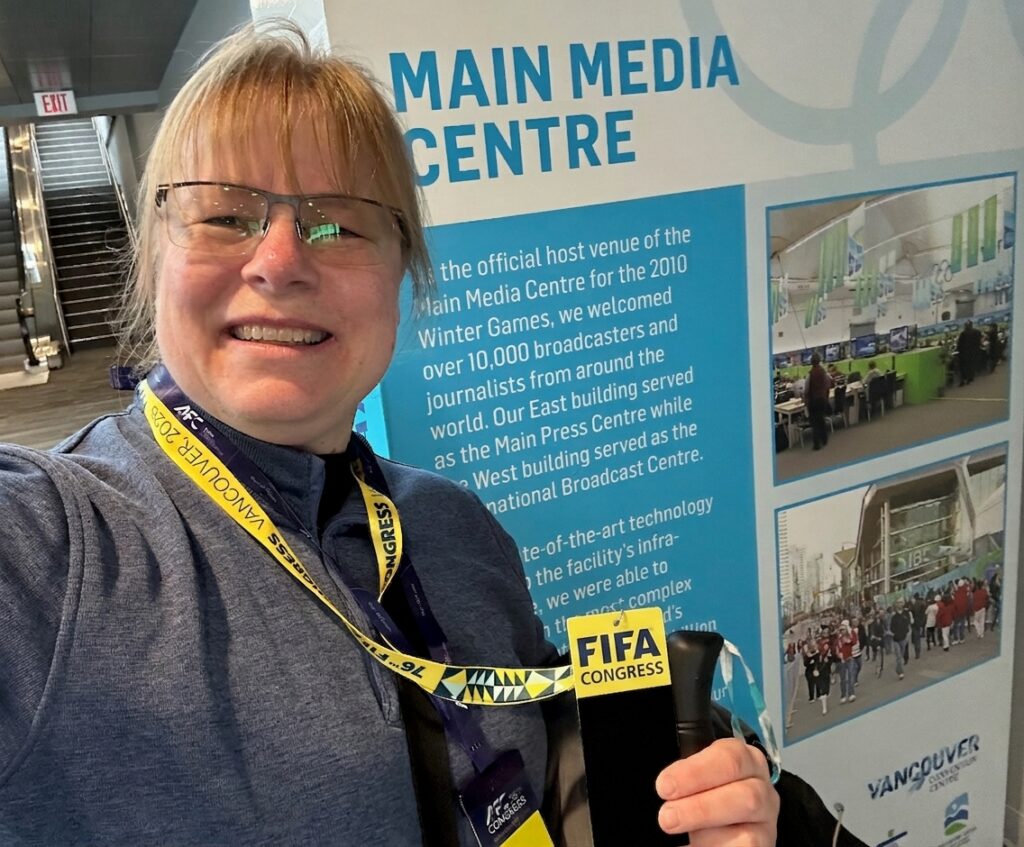
This is in 2026 when the World Cup was heading to Vancouver; Media for FIFA Congress.
This is one of my first Vancouver Whitecaps Matches as Media back in September 2025.