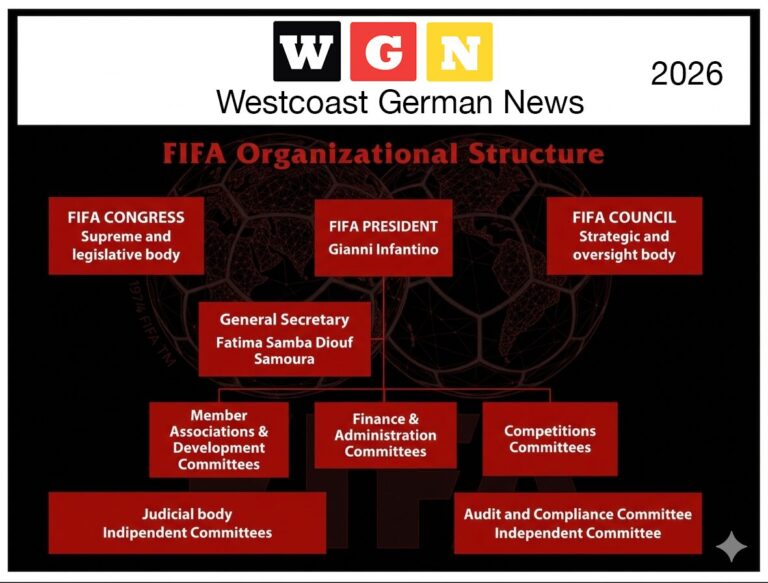

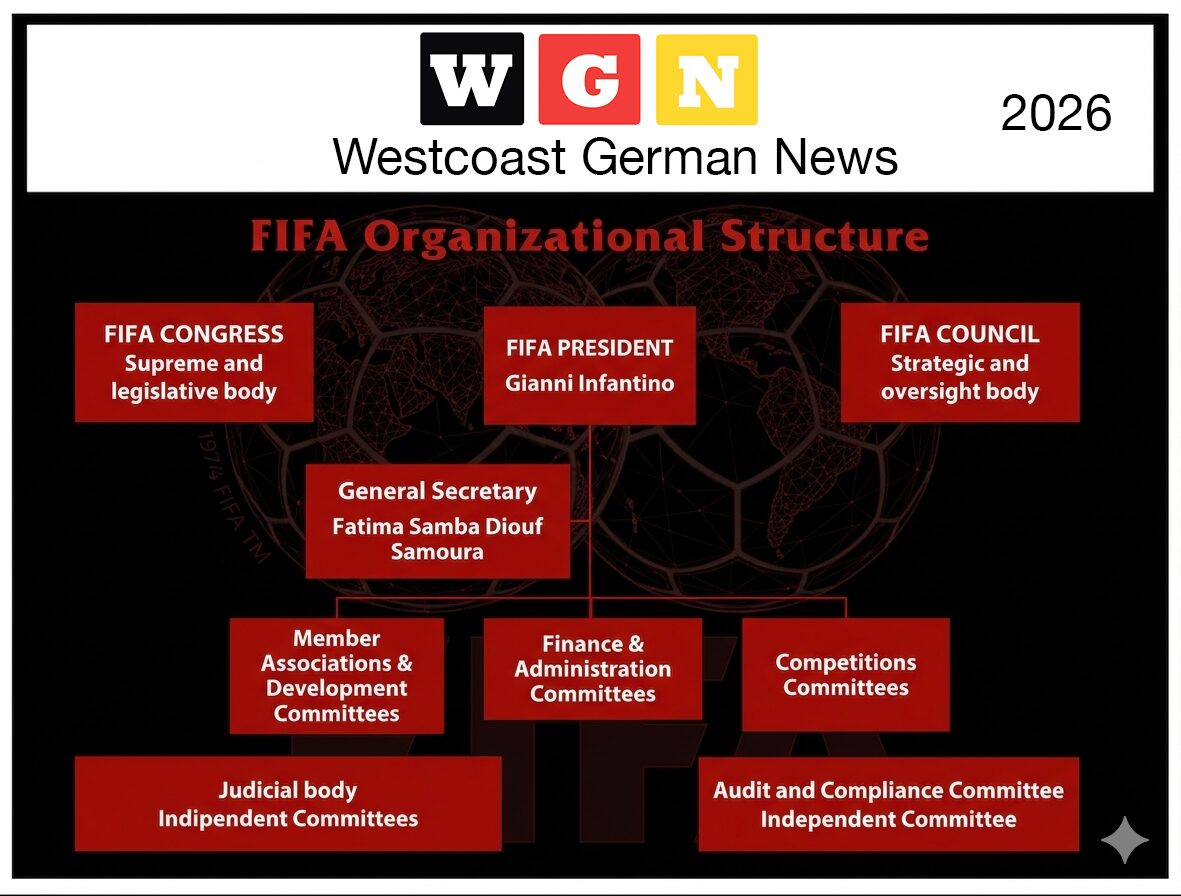
The FIFA Council sits at the center of global football governance. Created through major reforms in 2016, it replaced the old Executive Committee with a more transparent and structured leadership model. The Council acts as FIFA’s strategic engine. It sets long-term goals, approves major tournaments like the World Cup, and oversees how football develops across continents.
The Council does not handle daily operations. That responsibility belongs to the General Secretary. Instead, the Council focuses on high-level decisions—similar to a corporate board of directors. It ensures that FIFA stays aligned with its statutes while adapting to the changing global game.
Leadership at the Top: Switzerland’s Influence
Switzerland holds a uniquely powerful position in FIFA. The organization is headquartered in Zurich, and its president, Gianni Infantino, is Swiss. As Council chair, Infantino drives discussions, shapes priorities, and represents FIFA on the global stage.
Although Switzerland does not currently hold multiple elected seats through UEFA, its influence remains strong. Leadership at the presidential level gives Switzerland a central role in guiding football’s future. For beginners, this is key: Switzerland leads from the top, even without broad Council representation.
Germany: A Seat at the Decision-Making Table
Germany has direct influence within the FIFA Council through Bernd Neuendorf.
🇩🇪 Germany
Bernd Neuendorf
Role: FIFA Council Member (UEFA representative)
Background: President of the German Football Association (DFB) since 2022
Relevance: He is currently the only German on the FIFA Council, representing European football within FIFA’s top decision-making body
Germany’s presence reflects its status as one of football’s global powerhouses. With a strong domestic league, international success, and financial stability, Germany plays a significant role in shaping policy. Neuendorf contributes to decisions on competition formats, funding distribution, and development programs. In simple terms, Germany has a direct vote and real influence.
Austria: Active but Not Represented
Austria, while an important member of UEFA, does not currently hold a seat on the FIFA Council. This absence highlights how competitive European representation is. UEFA has limited spots, and not every nation can be included at once.
For Austria, this means influence happens indirectly—through UEFA discussions rather than direct Council voting power. Beginners should understand this clearly: Austria participates in European football governance but does not currently sit at FIFA’s top decision-making table.
Why Representation Matters
The FIFA Council has only 37 members worldwide. Every seat carries weight. Countries like Germany can directly shape global football policy, while nations like Austria must rely on alliances and regional cooperation.
Switzerland shows a third model of influence—leading through the presidency and institutional presence rather than multiple Council seats.
The Big Picture
In 2026, German-speaking countries occupy different positions within FIFA’s power structure. Switzerland leads from the top, Germany holds a key voting seat, and Austria remains just outside the inner circle. Together, they illustrate how influence in global football depends not just on passion for the game, but on strategic positioning within its governing bodies.
General Information
The FIFA Council sits at the heart of global football governance, shaping the strategic direction of the world’s most popular sport. Established under sweeping reforms in 2016, the Council replaced the former Executive Committee with a more modern, transparent structure. Chaired by FIFA President Gianni Infantino, the Council is responsible for setting long-term priorities, approving major decisions, and ensuring that the organization operates in line with its statutes and global mission.
Infantino, who assumed the presidency in 2016, has focused on expanding international competitions and increasing investment in football development worldwide. A Swiss-Italian administrator with a legal background, he previously served as UEFA’s General Secretary and has emphasized financial redistribution and global inclusivity during his tenure.
Supporting the Council’s strategic leadership is FIFA General Secretary Fatma Samoura, who plays a crucial operational role. A Senegalese diplomat and the first woman to hold the position, Samoura oversees FIFA’s day-to-day administration, ensuring that Council decisions are effectively implemented. Her background with the United Nations has brought a strong governance and compliance perspective to the organization.
Among the Council’s most influential members is Sheikh Salman bin Ibrahim Al Khalifa of Bahrain, President of the Asian Football Confederation. A long-time football administrator, he has been instrumental in expanding the game across Asia and represents one of the largest and fastest-growing football regions in the world.
From Europe, Aleksander Čeferin, President of UEFA, also plays a key role. A Slovenian lawyer and football executive, Čeferin has been a strong advocate for financial fair play and competitive balance, often influencing broader FIFA discussions through Europe’s significant footballing power.
Representing Africa, Patrice Motsepe, President of the Confederation of African Football, brings a different perspective. A South African businessman and philanthropist, Motsepe has prioritized infrastructure development and financial stability across African football associations.
Together, these leaders reflect FIFA’s increasingly diverse governance model, spanning continents, cultures, and professional backgrounds. The FIFA Council’s role is not just administrative—it is strategic and symbolic, guiding the evolution of global football while striving to better reflect the diversity of the game it governs.
TAGS: FIFA #FIFACouncil #WorldFootball #GermanFootball #UEFA #SportsGovernance
About The Author