
Interview with Renae Shadler: Dance Artist Bringing “Skin” to PuSH Festival
Elke Porter, West Coast German News: Hi Renae! Thank you for taking the time to speak with me today. So, I know you’re dancing at the PuSH Festival and coming to Vancouver. You’re in Perth right now?
Renae Shadler: Actually, I’m in Perth at the moment. I’m originally from Western Australia, but I live in Berlin.
Elke Porter: Okay, so I just have 10 questions, not too many, and you can answer as long or as little as you like. Please tell us a little bit more about your background and how you got started in dance and theater.
Renae Shadler: I’m originally from a small coastal town called Bunbury in Western Australia. I always wanted to be on the stage. I grew up watching musicals with my grandmother—videos of Shirley Temple and things like this. I joined lots of groups when I was a child: the Southwest Opera Company, dance classes, singing classes—anything I could join, I joined. Then I went to a performing arts high school, so I moved out of home at 15 to go to a specialist school for arts and then went to university to study dance.
I started working quite early in Europe. From Melbourne, where I did my studies at the Victorian College of the Arts, I was going over and doing development programs in Europe and also started working for some choreographers there. Alongside that, I was making my own work. Then the time came in 2016 to make the leap to Berlin, in Germany, and I’ve been there ever since.
My research is very much based on this idea of worlding, which is something that a lot of people talk about in different ways. For me, I had a residency in Iceland, a solo residency next to the Snæfellsjökull—it’s an active volcano with a glacier on top. It’s a very powerful geological form, and I began researching how my body also had these elements within it and how I could connect with the environment through movement and understanding these different states. That’s continued all through my research, this connection with environment, and it’s also there in the work we will bring to PuSH: Skin. We have a dialogue between the two different performers—myself being one of them, and the other being Roland Walter—and the landscape, so the scenography and set design.
Elke Porter: Amazing! What inspired your transition from dance studies to theater, and how did that shape your artistic approach?
Renae Shadler: I actually studied theater at the Victorian College of the Arts, so I was always back and forward between theater and dance. Also, at the specialist high school I went to, I did the drama and contemporary dance programs. I think it depends on what the work requires. I also work as an actress in Berlin with the Neuköllner Oper, an experimental opera company, and work as an actress for Anna Viebrock, another director and advisor. So I definitely appreciate the voice as a medium and theatricality. And at the same time, the intricacies of the body really interest me and how they can be foregrounded. I think the use of voice and physical expression through the body are both very powerful, and they can be interchangeable. So I’m always back and forward. It depends on what day you ask me if I’m a dancer, a choreographer, or an actress.
Elke Porter: You’ve received grants like the Australia Council ArtStart Grant and Creative Young Stars Grant. How do these opportunities influence your career and international experiences?
Renae Shadler: I think these opportunities are very much gateways. When you connect with these networks, they offer a lot of exposure. Yeah, they kind of—one leads onto the other. So I definitely understand that getting through these gates can be difficult for artists, so I’m very appreciative of the privilege.
Coming to Europe through the Dance Web Scholarship at ImPulsTanz in Austria was a very big step because there were—that Dance Web scholarship, they choose a few people from each country. So I met a collaborator from Tanzania, Isaac Abaneko, who I still work with. Miriam Zügner from Austria was there, who’s actually the dramaturg on Skin that’s coming to PuSH. Yeah, it really creates a community, and we see each other often on the touring networks.
Another big one was Aerowaves, the European network in 2021, and Tanzplattform Deutschland with Skin—we were there also in 2022. Yeah, so this was really eye-opening, I would say. It’s like the saying about your little dot—you know, as the dot gets bigger, you also have access to more negative space, so you realize that there is more space there. And I think as the experiences grew, I kept understanding how much I didn’t know. The humbleness in that and the curiosity… yeah, so I feel very privileged to have a very rich, experientially rich artistic experience so far, and I hope it continues.
Elke Porter: Yes, that sounds amazing! Can you share some highlights or memorable moments from your time studying and performing in Europe, such as at École Philippe Gaulier or Théâtre du Soleil?
Renae Shadler: Oh yeah, that’s a long time ago. Okay, so Philippe Gaulier was a clown school, and I felt like—it was a summer intensive that I went to—in this summer in a regional town outside of Paris, I learned more than in my 3-year acting degree. It was so concentrated, and there were really amazing performers there, again from all over the world. So we were working in English, but there were all these side conversations in German or French or Norwegian. And yeah, it was looking also at the fragility of the human. I think that has gone through my work, this interest also in a lack of control.
I’m working with different bodies in my other series of work—it’s with an Aerocene sculpture, which is a solar sculpture that’s really big, 4x6x6 meters. For me, it’s like a body for the elements because it is a solar sculpture—it’s lifted by the sun, and it’s filled with air, and it moves with the wind. And I create these outdoor works with this sculpture in collaboration. And there isn’t really control in this sculpture. We realize that as much as we study the environment and we create techniques for different climates and changes, we’re also reminded of this lack of control and this chance. Yeah, so I’m constantly having dialogues with diverse bodies that can’t always be controlled or predictable. This really interests me, and I think this is this fragility of the human, this desire to understand and be surprised. Yeah, these softer areas, you know, that we can’t really grasp. So Philippe Gaulier definitely taught me that.
And then Théâtre du Soleil in France—I was there as an intern with Ariane Mnouchkine, who’s a very important theater director in France. And I actually toured with them to the Edinburgh Festival. It was amazing to see this theater machine. It’s a very famous French company, and they work very physically. And she always collects the cast all together before the show and really centers the focus. Yeah, there was a real magic around that company that really inspired me, and the idea of community. They also have cooks, so I remember we’d have like baguettes with Brie cheese and jam in the afternoon break, and it was so delicious because you’ve been working so hard and you’re so physically exhausted, and then we would come together to eat. So I think that company definitely taught me this idea of ritual and community and seeing everyone equally. Ariane and her creative team are definitely directing this space and they’re leading the space, but the cooks and the actors are all sitting at the table together, and this I really appreciated.
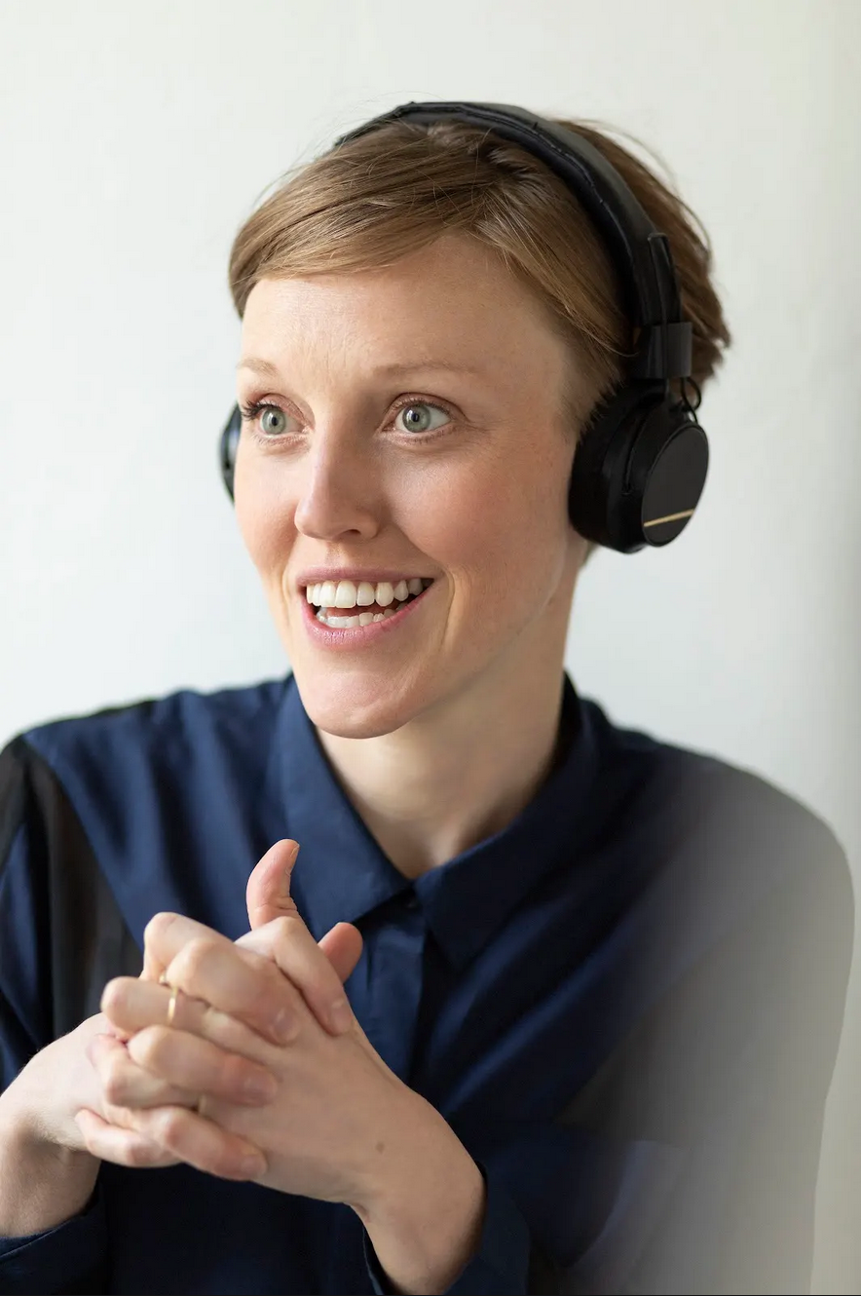
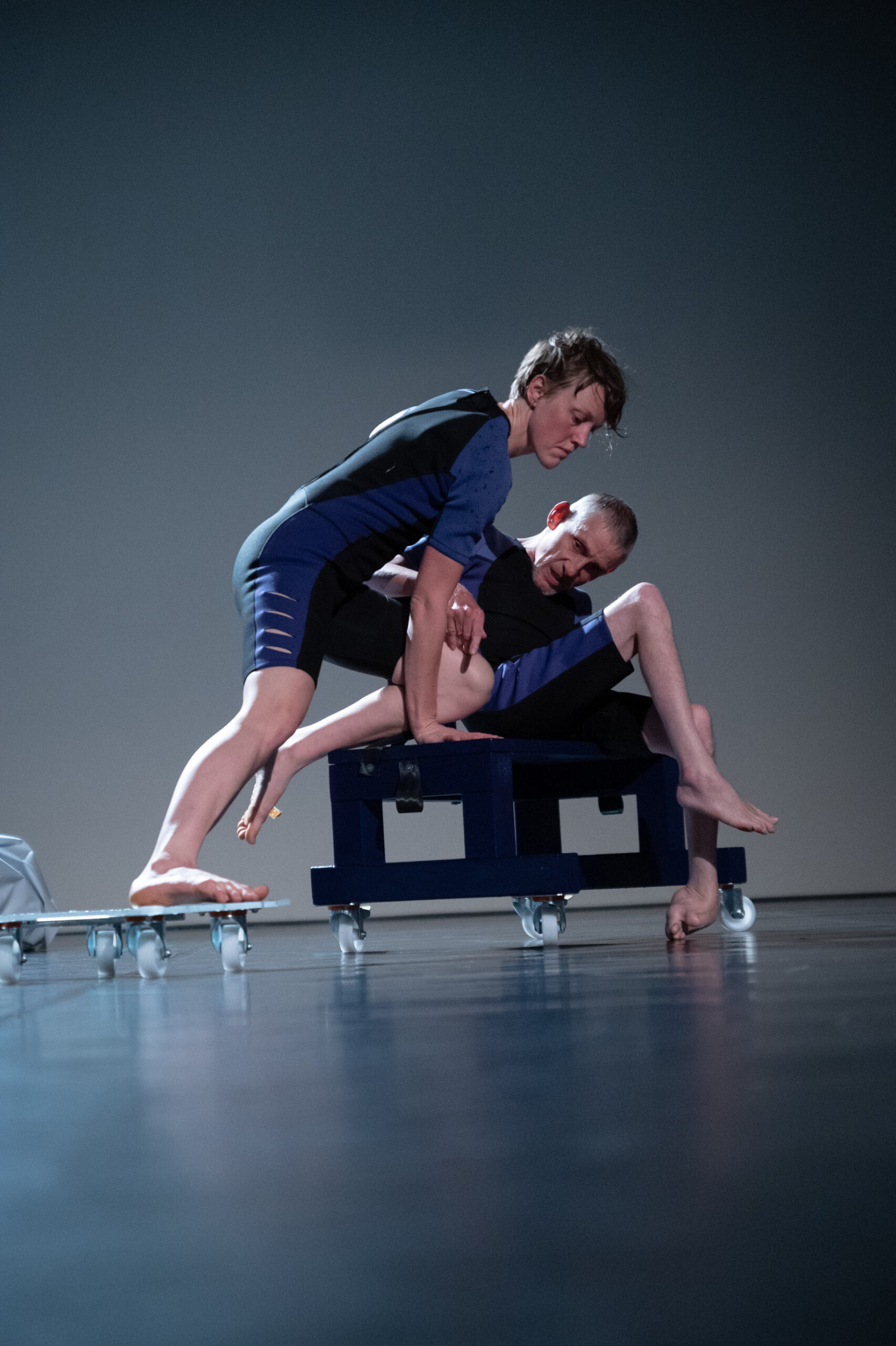
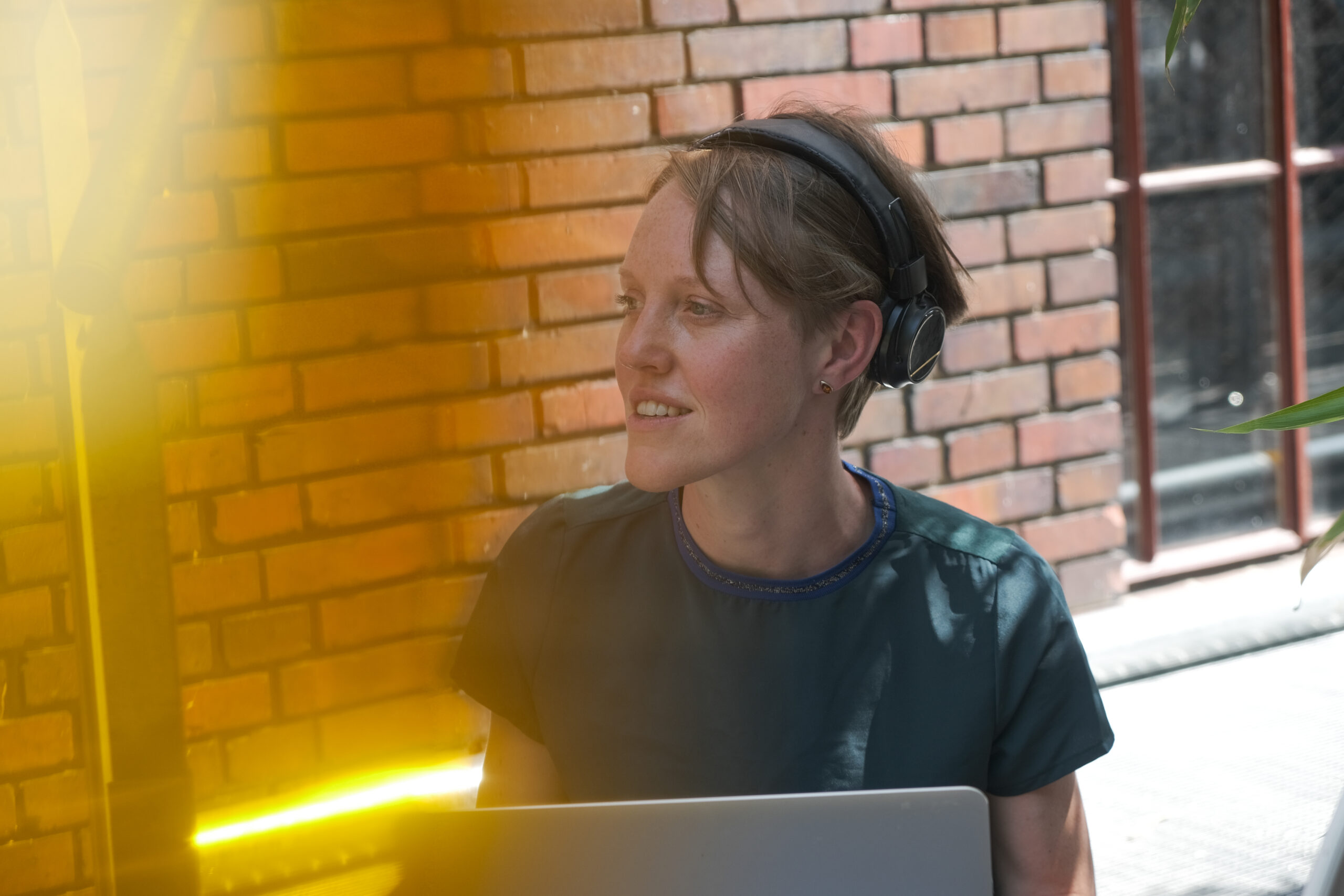
Left: Photo Credit: Jubal Battisti (Renae Shadler) | Right: SKIN Production images_Credit: Beat-pix with Heart
Elke Porter: Sounds amazing. So how do you approach creating your own performance works, especially site-specific pieces?
Renae Shadler: Yeah, so there are two different strands to my work. One is working with different abilities and this mixed ability conversation. And the other one is outdoor works in public space with the solar sculptures and working more with site outside of a theater. And I think they are really connected also in terms of seeing diverse bodies on stage and creating platforms for experiencing things that are unfamiliar to us. Yeah, creating these lines of empathy maybe—as much as we can’t make the environment a human thinking body, we can attempt to relate to it through our system of relating, which is often empathetic or very tactile, maybe, also like touching the wind and things like that.
So when I start a process, it often comes from understanding the collaborators that I’m working with. Sometimes this can be through a commission, like a desire, for example, to work in a public space with a specific community group. Or it can come from—in the case of Skin that’s coming to PuSH—Roland Walter, who is a man in his 60s with full-body spastic paralysis, actually asked to create the work by seeing a solo I was doing and approached me through that way. And then we started a collaboration. Or being very interested in an environment—so in the case of Restore My Solo, thinking about this Arctic landscape in Iceland and how to relate to that. So there is a relation, always, between myself and the outer world. Or if I’m outside and I’m choreographing, then it’s also understanding the subjects, so how these two bodies move together.
Elke Porter: Interesting. Is there anything you like to watch to get inspired, or something—what’s your favorite thing to do when you have some spare time to recharge you creatively?
Renae Shadler: I’m very fascinated in different species. Yeah, I like also to think through the body. I definitely think of dance as a form of philosophy or understanding for our surroundings and our relations deeper. So I think about it quite academically—also reading philosophers and understanding how things work and then how I can physicalize that in my body.
And often with animals, when they have these different tempos—like, for example, in Under My Gaze, which is an outdoor trio with one of these solar sculptures, the first part in a trilogy I made in 2022, I was interested in Hydra, which are these long sea anemones, but with tentacles that take photosynthesis from underwater. And they would reach out their tentacles, and then when there was a current or something in the water, they would quickly contract. And it was so beautiful because they kind of are floating and then having these short contractions.
And then also reading poetry—there was a poem about how humans have gotten it wrong. Like, they look through the eyes, but actually it’s from the crown of your head that we see, because the crown of the head is the relation to the sun. So I was interested in really thinking of looking from the crown of the head and releasing the gaze. So I think this interest comes from studying how things comprehend, you know? Like, what is this process of understanding physically and how can that become a movement language to then create a show where the audience doesn’t necessarily need a dance background?
I like performing in public spaces because it’s not always a ticket holder. You know, you get the person walking through the park that then follows you for an hour, and at the end they’re like, “What was that? I saw this, and I saw this, and I saw this. Yeah, watching it reminded me of my grandparents.” And I love these chance encounters, and I think dance can do this. Dance can really ignite the imagination that is beyond language that you can perform. Also, we toured to lots of different countries—so for example, we were just in Slovakia, and I don’t speak Slovakian, but through dance, you kind of create this inner dialogue that is very primal almost.
Elke Porter: Oh, interesting. Collaboration seems central to your practice. How do you choose projects or collaborators, and what makes a partnership successful?
Renae Shadler: Yeah, I think it’s also through experience that you start to know more about your collaborators and understand yourself. I love performing, I love touring. I have a lot of energy and can get very excited about something, so I can be quite forward in this space. So it’s nice to find collaborators that can match that.
And then also understanding that it’s like an ecosystem, right? So our strengths are often also our weaknesses, so how then can this excitement and drive also be transformed into listening and giving space. Kind of when I feel like I’m very excited, to take that breath and come back and really make eye contact with whoever I’m in the room with and understand their energies. Because I think that has been something through the years of moving through different cultures—also people with different backgrounds do have different communication nuances. Like, you would know this very well through your work with Canadians and Germans. I worked—I had a collaboration with someone from Finland who was very quieter and subtler than me. And how could I understand that language again? Like, not necessarily a different spoken language, but a different collaborative language.
So I think it’s a constant process of trying out a collaboration. I would always say it’s great to have a small starter fund—if you can find something that allows you to both get paid and have your studio and work together for a residency, maybe for 2 weeks. And just see how it is and give yourself the opportunity at the end to say, “I actually—we don’t really meet each other. Like, we’re trying very hard, and there’s a desire there, but maybe it’s to see a show together. Do we need to create something together?”
And then the next level is like, okay, if we invest the time to create something together, are we gonna want to tour for 5 years together, you know? And really say that, like, “Oh, I would like to have a child in a year, so I’m going to have a year off. Is that okay for you financially? Because now we’re connected—you could replace me, and would you be okay with that? Or would you be okay for a year off?” And it sounds like a marriage contract or something, but it becomes like that when you’re a freelancer because you’re kind of building an income based on different possibilities.
And often, if you invest quite a lot of time—because it is true, unfortunately, the arts, they’re not always paid, and it is getting harder, I think, with these more conservative governments and things that are happening in terms of defense budgets. We definitely feel that in Germany—a lot of the arts funding is moving into defense. And so it is more competitive. So you also invest your time where you think that can also support you and support your artistic voice.
Yeah, so I would say pick wisely. You know, dance together, you know, as if you would on a traditional partner dance floor. Have one dance, have a few different dances, be very honest, find out your rhythm, and see if that continues.
Elke Porter: Oh yeah, for sure. I can see that. You don’t think about it if you’re not in the field, right, to hear from someone who’s professional. Okay, looking ahead, what are some projects or directions you’re excited to explore in your career? Have you ever been to Canada before, for example?
Renae Shadler: I have, I’ve been to Canada a few times, always to Quebec. I’m very connected with, or inspired by, Erin Manning, who’s a professor at Concordia University, and she used to run a space called the SenseLab. So I had a beautiful residency there in 2019, and then I was also at CINARS as part of the German delegation in 2022 or 2023—I was part of the CINARS German delegation in Montreal as well.
And I find this artistic conversation in Canada very interesting. There’s a lot of independent work being made. And I think the states are quite separated from what I can see, but yeah, I’m really looking forward to entering into Vancouver and being part of the PuSH Festival. Gabrielle Martin, the director, I think is really building sustainable practices and interested in creating dialogues with the artists, and I find that very inspiring.
At the moment, new things that are coming out—I was lucky to receive European funding which has 6 partner festivals, and we start our first residency for a new solo work that I’ll be dancing in. Hannah Tango Kriton is doing the light design, and she’s creating light objects that move with me, so these light objects also have errors—they are getting stuck, they’re working with different fabrics inspired by these outdoor Aerocene sculptures, and we’re trying to move that kind of complex relation between humans and weather and predicting weather and these extreme changes that are happening now globally. How is that also affecting humans’ nervous systems, and yeah, what is all this data?
So this new solo is called Behemoth, and it’s the third part of the Dance Meets Aerocene trilogy, and that starts in Slovakia in April this year. I’m also interested in more long-term work, so working with a group of young people to create work on the same site every year for 3 years. So we see the development of the site in parallel with the development of the human body to start to understand how the two time spans move differently, you know? Like the human lifespan is around 100 years, and then this ecological change can sometimes be very fast or sometimes be very slow, and how can we relate to that?
So that’s something I’m starting researching for this year, working with different youth companies, and I’m really interested in, yeah, continuing to return to the same place also to work on the same site and study it really scientifically—also how can we embody changes in climate change data to make it more real? I think it’s often very abstract, like these numbers. But can these young people also understand the dryness in the soil or these shifts in humidity that are very subtle?
And then there’s a third new project happening this year, which will continue this mixed ability conversation and accessibility, and it will also be with Roland Walter, who’s joining me at PuSH Festival for Skin. However, I will be choreographing and the artistic director, and he’ll be working with Tamara Rottmann, who’s an artist with multiple sclerosis and uses a walking frame and has a beautiful physicality. She’s also a choreographer and dancer based in Berlin. So yeah, this will be a duet between the two of them, called Unbound. I’m looking at this idea of unbounded energy and what is a physical release for people with disabilities.
Elke Porter: Wow! That’s just—yeah, that’s amazing. Because I really think that Germany, especially Berlin, has way more artistic opportunities than Vancouver does. You know, Vancouver, these things seem to be a little bit more on the fringe, while in Germany it’s like a main thing. But that’s just the way I’ve seen it.
Renae Shadler: Yeah, I would say Berlin is very unique in that the freelance scene is very strong, but with these budget cuts which have been so harsh since the end of Corona, really, like the last 2 or 3 years, I definitely feel people are moving out of Berlin or starting to change professions. Yeah, which is sad from my perspective, because I think that is a big draw card of Berlin—the club scene, obviously, the freedom of speech, this artistic experimentation, creating quite avant-garde languages that then kind of inspire more state theater type programs.
So I hope we can find a way to continue. I definitely moved to Berlin because of the opportunities there and being within Europe. It’s very possible to travel, whereas Australia was quite geographically isolated. And if I’m looking at sustaining a practice, you need to go out, I think, with this type of work. Yeah, exposure is really important—these gateways, right? These opportunities for exposure and learning.
So yeah, I hope Berlin can continue that. There’s definitely a lot of advocacy happening at the moment in the free scene, but it’s really hard to make a living at the moment as a freelance artist. I think anywhere in the world, but also in Berlin.
Elke Porter: Are you following the World Cup?
Renae Shadler: No, I’m not following the World Cup. I’m still Australian, unfortunately. I do like watching football, though, I have to say. When the World Cup is on, we all get together at a friend’s house and watch it together. Yeah, and have a beer, but I’m not following it privately.
Elke Porter: Australia and New Zealand are coming to Vancouver. And Switzerland, but we don’t get Germany. Germany’s over in Toronto or somewhere in the States. But we actually get Switzerland, so I’m gonna try and watch them. So my blog deals with Swiss people, Austrians, and Germans.
How about your family—do your parents speak German, or are they originally from Germany?
Renae Shadler: Yeah, so actually my great-grandfather came to Australia during the Second World War, and my last name was Schädler and he changed the spelling of his name to kind of hide the German roots and changed it to Shadler. So my name is spelled S-H instead of S-C-H, and the D instead of a T, and he got rid of the umlaut on top of the A, which is very difficult now because living in Germany, it’s always spelled S-C-H. S-H doesn’t exist. But because it was changed during this period, yeah, I’m staying with my birth certificate spelling.
And he was originally from Hamburg and came over on a boat, and his sister stayed in Hamburg and had a family. And there’s been a reuniting of the families now that I’m in Berlin. And I have like a second or third cousin, Uncle Gerd, who works as a scenographer, so set designer, and she’s working in state theaters and also in the Berliner Ensemble. She had a piece in Berlin. So that was really great because somehow this artistic line is in the genes, I would say. And now I’ve just married a Berliner, and we’ve had a child in Berlin, and we’re coming back together—we’ve returned to Germany.
Elke Porter: Oh, that’s so nice! Our principal at the Johannes Gutenberg Schule was actually from Berlin. Yeah, it’s really fun.
So do you want to share any social media or anything with my readers? You know, I’m going to be publishing this on the West Coast German News blog, and if there’s anything you want to share… Do you have a Facebook, Instagram, TikTok?
Renae Shadler: Totally, yep! I have a website—renaeshadler.com—which also has a calendar on it for upcoming shows. I have Instagram, which is renae_shadler_, and that also has shows that are coming up. There’s a Renae Shadler & Co. Facebook page also. So yeah, very open to getting in touch.
And as I mentioned, we’ll be in Vancouver for the PuSH Festival with Skin, this mixed ability duet with Roland Walter that was actually created in Germany and part of the Tanzplattform Deutschland. So we’re very happy to have this Australian-German collaboration and be bringing it to Canada for the first time. It’s actually my first time presenting work in Canada as a choreographer, so I’ve been there before, but first time with my own work.
Elke Porter: And when are you coming for the festival?
Renae Shadler: Yeah, it’s the 4th, 5th, and 6th of February at the PuSH Festival.
Elke Porter: Okay, coming up soon, then!
Renae Shadler: Yes! At the PuSH Festival. I can give you the link—the PuSH Festival link and my website link for Skin.
Elke Porter: Okay, I will make sure I keep this. And I can maybe tell you about the three new shows for spelling. One’s called Behemoth, which is part 3 of the Dance Meets Aerocene trilogy, and that’s starting development in April in Slovakia this year. And then there is Becoming Contours, a 3-year project, which is a 3-year site-specific work with teenagers. And then I mentioned a new duet with Roland Walter and Tamara Rottmann—a new duet which are two performers with disabilities. She has multiple sclerosis, and I’ll be supporting as artistic director.
Elke Porter: Nice. Yeah. We used to have a choreographer from Germany—she was this older lady named Irene, something or another—and she would do ballet choreography. So there’s like a whole connection with Germany in many aspects of Vancouver, you know? And that’s my job to dig it out in whatever form it comes.
Renae Shadler: Yeah, lovely! Yeah, thank you for doing the blog. I’m curious to read it.
Elke Porter: Yeah, perfect. What time is it there? What day is it? You’re on Saturday?
Renae Shadler: It’s Saturday and 10:40 in the morning. Yeah, and I actually already had an interview today with a radio program, so it’s nice! I think they’re doing a great job. I hope people come and see the show.
Elke Porter: Excellent. Okay, it was nice meeting you, and good luck with everything, and I might see you in Vancouver!
Renae Shadler: That would be lovely. Ciao, Elke! Bye!
For tickets to see Renae Shadler’s “Skin” at the PuSH Festival (February 4-6, 2026), visit: pushfestival.ca
Follow Renae Shadler:
- Website: renaeshadler.com
- Instagram: @renae_shadler_
- Facebook: Renae Shadler & Co.
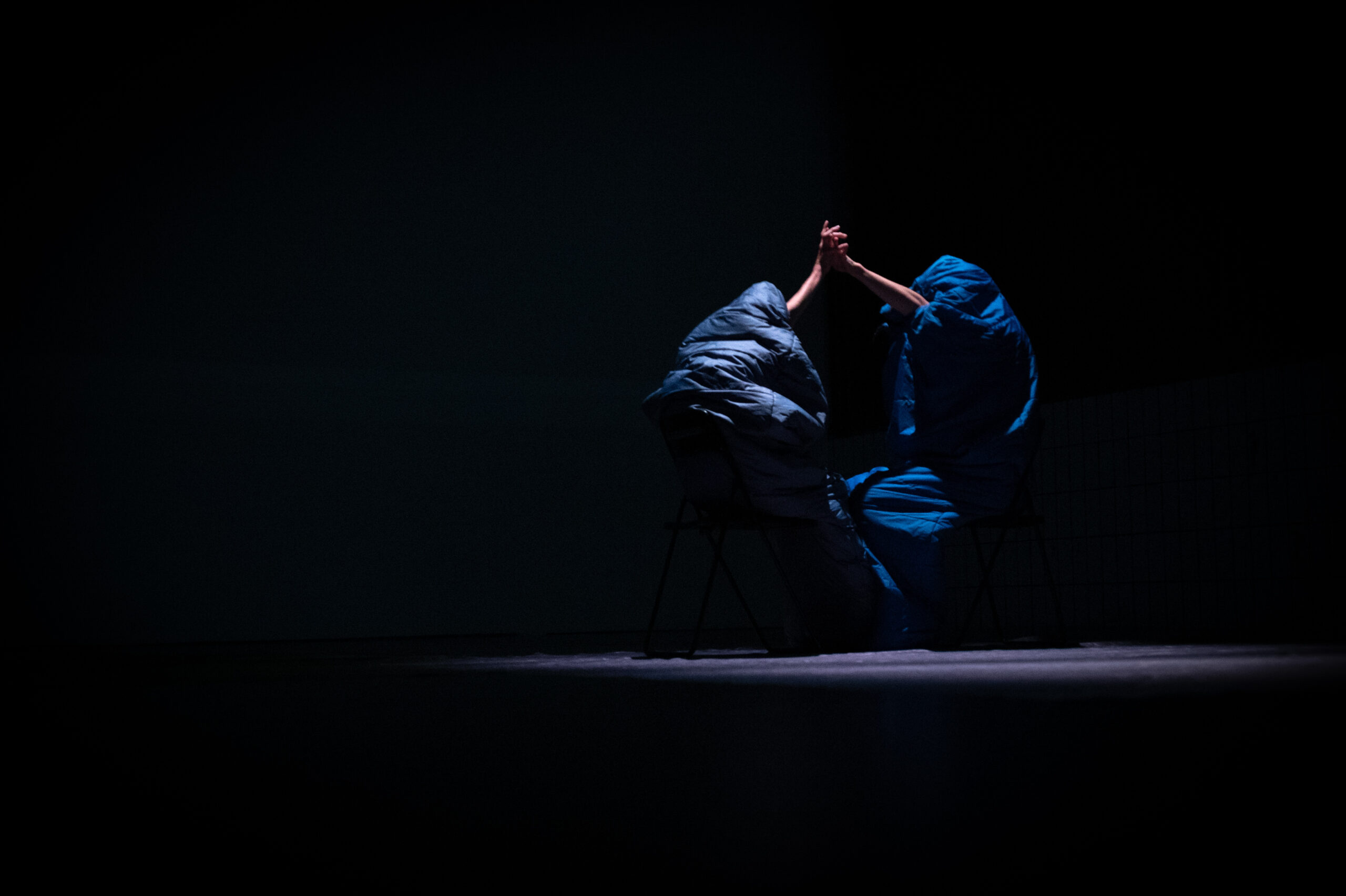
SKIN Production images_Credit: Beat-pix with Heart
About The Author